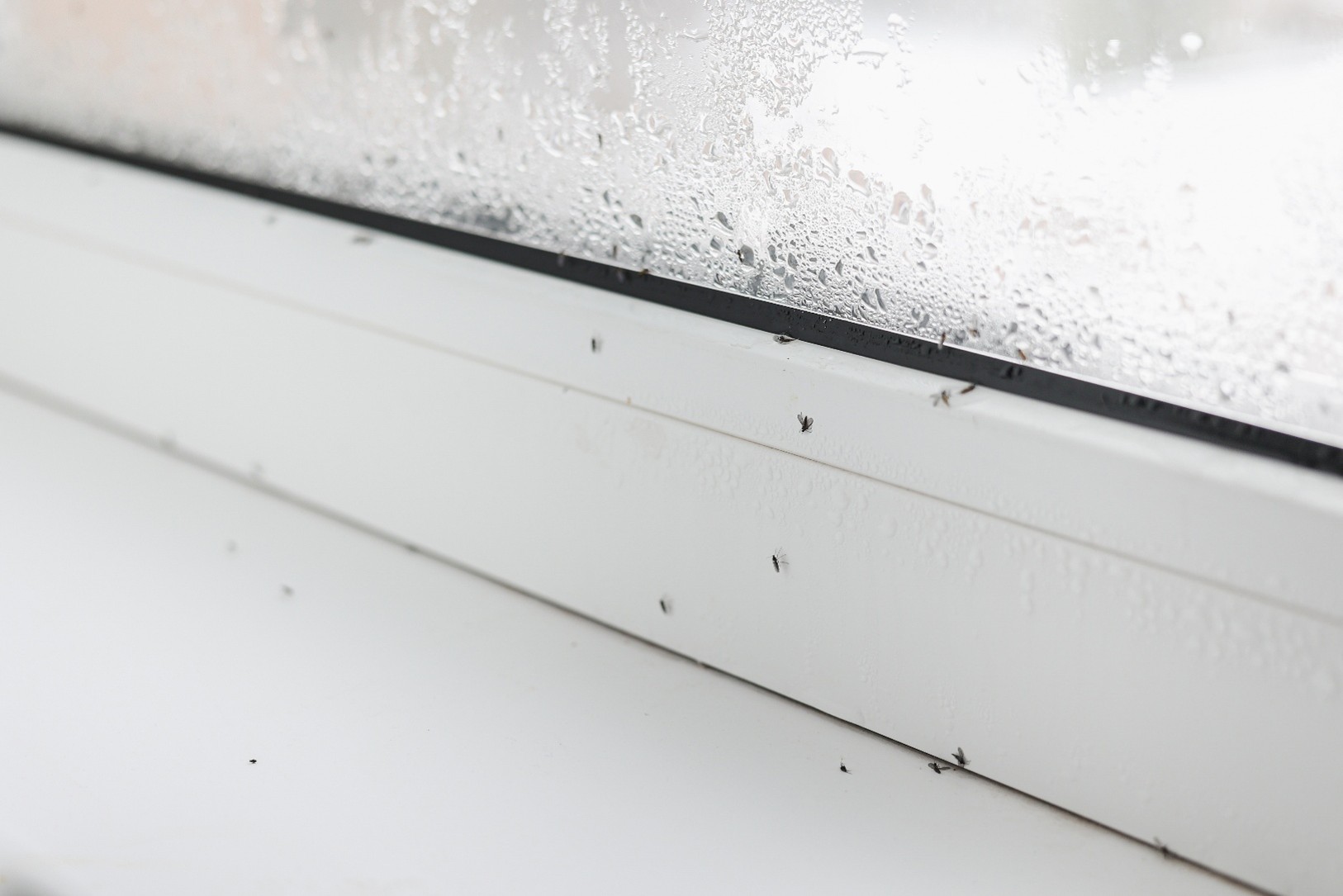
If it’s autumn and you’ve suddenly got flies collecting at an upstairs window, the odds are you’re looking at cluster flies. They appear en masse in homes from October to December.
Unlike the house flies you’ll be used to swatting away from the kitchen in summer, cluster flies have no interest in your food or your bins, and their arrival says nothing about how clean your home is. What they want is somewhere warm and undisturbed to see out the winter, and a roof space suits them well.
A cluster fly is a little larger than a house fly and a good deal slower, with a dark grey body and fine golden hairs across its back that rub off at the lightest touch. At rest, its wings fold one over the other instead of sitting side by side. You won’t see it dart about the way a house fly does either; they’re clumsy fliers that bumble into windows and blunder into each other.
A large group of cluster flies gives off a distinctive, sickly-sweet odour, which plenty of people notice well before they know where it’s coming from.
Cluster flies spend the warmer months outdoors, and they have an unusual start in life: their larvae develop inside earthworms as parasites. The female lays her eggs in the soil, and once they hatch, the young burrow into a worm to feed and grow, killing it eventually, and stopping its vital job as a natural soil fertiliser.
Come autumn, the now-adult cluster flies need shelter from the elements, and they don’t need to travel far. They gather on the sunniest wall of houses through the afternoon, then, as the evening cools, work their way in through whatever gaps they can find: a lifted tile, the gap behind a fascia board, the edge of a window frame, an air vent. From there, they push deep into the loft or the wall cavity, and it takes only a few days of this for them to populate your home in the hundreds.
Once they’ve successfully invaded your home, cluster flies go dormant and wait out the cold, tucked into the roof space and well out of sight. But they don’t just stay put. A mild spell, a bit of winter sun on the tiles, or the heating coming on for the day may rouse them and trigger them to fly towards light. That’s when they turn up at your upstairs windows again, weeks or even months after you thought you’d seen the last of them. If you get a sudden crowd of flies in the middle of winter, this’ll be why.
There’s a knock-on problem, as well. A loft full of dead flies makes a perfect meal for carpet beetles, whose larvae chew through wool, carpet and stored clothing, so a fly problem can evolve into something worse come springtime.
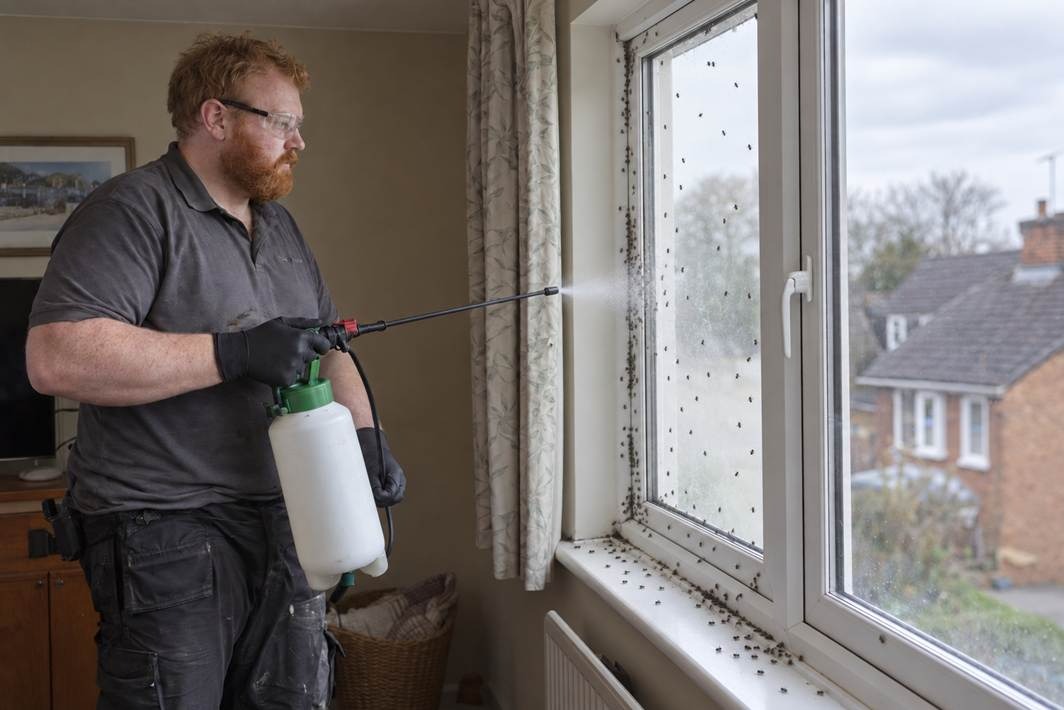
If you feel like you’re being targeted, you aren’t going crazy. Cluster flies are thought to leave a scent behind that guides the next generation back to the same building, and often the same room. Once a house has been marked down as a good spot to see out the winter, it stays on the list, and the numbers are likely to grow every year. So, if you get cluster flies, it’s better to have them professionally treated as soon as possible.
If you notice them swarming your window, you might be able to vacuum up a good number of them from there. Just make sure you dispose of the vacuum bag, or empty the vacuum afterwards.
But that won’t get them all, and you most likely have a far greater number already dormant in your roof. Proper treatment will involve introducing an insecticidal fog or smoke into the roof space, ideally while the flies are still arriving in the autumn and before they’ve dug in for the winter.
This needs to be done carefully, however, because of other animals that may make your roof their home: like bats. Bats are a protected species, and if there’s a roost in your roof, harming them is against the law.
Cluster flies are technically harmless, but that doesn’t stop them being a nuisance. A heavy infestation is a miserable thing to share a house with, and it tends to come back for a second run once warmer weather gives them their cue to leave.
If you’ve spotted a cluster by your windows, or you’ve had them before and want them gone for good this time, get in touch and we’ll deal with it before they’ve properly settled in. We’ve been treating pests across Bristol, Bath and the surrounding area for over 30 years, and we’ll always agree a fixed price with you before we start.
For more seasonal pest advice, follow us on Facebook or have a read through our other blogs.
Reach out for expert pest advice or to schedule a service.
Find clear answers to common pest control queries. Learn about our services, safety standards, and what to expect from Action Force Pest Prevention.
We handle a wide range of pests including rodents, insects, wasps, and more. Our BPCA-certified team uses safe, effective methods tailored to your needs.
Yes. All products and procedures are approved for use in homes and businesses, prioritising safety for people and pets at every step.
We offer flexible appointments Monday to Saturday, 8am–8pm. Most enquiries receive a same-day or next-day response from our local team.
Yes. We stand by our work with clear guarantees and offer follow-up visits if needed to ensure your pest problem is fully resolved.