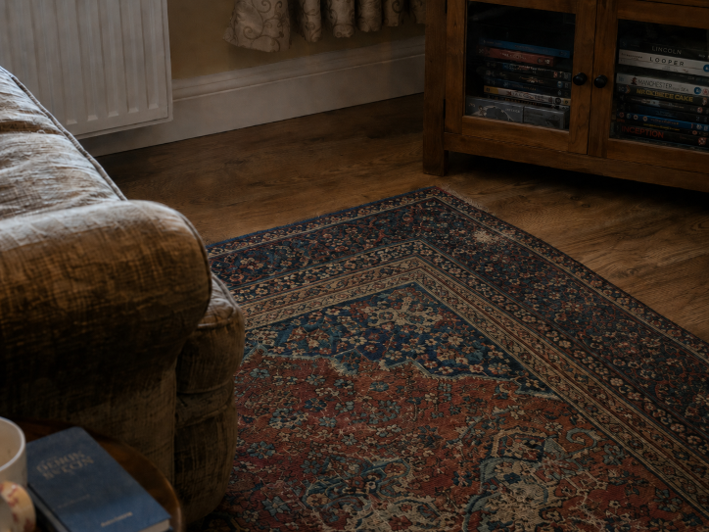
Bare patches appearing around a rugs’ edges. A holey wool. Threadbare carpet by the skirting board. These are the calling cards of a carpet beetle infestation, and by the time you notice them, the problem has usually been developing for months.
The frustrating part is how little there is to see. A carpet beetle infestation is mostly invisible while it's doing its worst. Understanding why is the first step to getting rid of it.
The adult carpet beetle actually poses no problem to you. It flies in through open windows in spring, feeds on pollen in the garden, and mostly stays out of your way. But it lays its’ eggs indoors, tucked into dark undisturbed corners, carpet edges, the undersides of rugs, and the folds of stored clothing.
The larvae that hatch from those eggs are the real nuisance. Informally known as woolly bears, they’re small, bristly, and feed on natural fibres, including wool, silk, leather, feathers, and fur. More specifically, they’re after keratin, which is a protein found in animal-based materials. You may have heard of it for being the building block of your hair, nails, and skin, which is true as well.
In more recent times, carpet beetles have been on the decline, thanks to the rise in synthetic, wall-to-wall carpets with no keratin to offer. But a wool rug, cashmere, or even a build-up of pet hair is all they need.
Larvae avoid light, so they stay in the darkest, least-disturbed spots they can find, hence you find the damage they deal in the corners and tucked-away places, like skirting boards and in wardrobes. By the time visible holes or bare patches are visible, the larvae have already been feeding for weeks to months. The BPCA describes their larvae as having overtaken clothes moths as the major British textile pest.
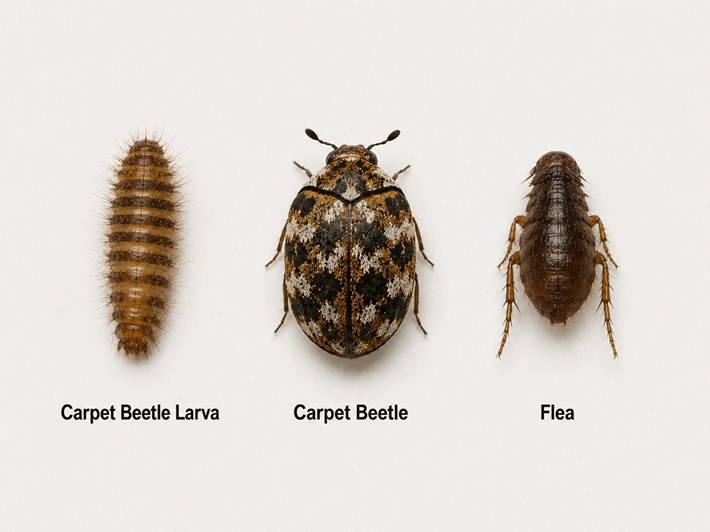
Carpet beetles are frequently mistaken for two other things: clothes moths and bed bugs (because their larvae can cause a skin rash that looks like bites). Treatment is different for all three, so make sure you’ve identified the right bug.
When most people see the signs of carpet beetles, they reach for the vacuum and a shop spray. While that can’t hurt, it’s very unlikely to solve the problem. The issue is that they concentrate in such tucked-away spaces, a vacuum or spray won’t reliably be able to get to them. Most sprays also aren’t up to the task of clearing up carpet beetle eggs, which are laid deep in fibres and crevices. Even if you get the adults and children, the cycle will just start over.
DIY treatment can help in the very early stages of an infestation, or as a preventive measure, but once the infestation is established across multiple areas, it's rarely sufficient.
Treatment starts with a thorough inspection of the property, including the spots that don't get looked at, like loft spaces, under furniture, and anywhere natural fibres or animal material may have accumulated undisturbed. Getting the full picture first is what makes the difference between treating the symptoms and resolving the infestation at its’ source.
Professional-grade insecticide is applied directly to the affected areas using products that penetrate where a consumer spray can't reach. A follow-up inspection will confirm the infestation has been resolved, including shed skins and frass, which can persist for a while after the larvae are gone.
If you're not sure whether what you're seeing is carpet beetles or something else, that's exactly where we can help. Our friendly local team will always start with a thorough inspection and form a strategy that is uniquely tailored to your home and your case. We’ll fix the problem, then go the extra mile to stop it returning. Get in touch at +44 117 444 9821 or book a visit online and we'll give you a diagnosis and a fair and fixed price before any work begins.
Carpet beetles get in through open windows, gaps around vents and eaves, and by hitching a ride on items brought in from elsewhere. Nobody’s expecting you to keep your windows shut forever, but you can make the conditions inside your home less hospitable:
Carpet beetles aren’t impossible to deal with, but they need to be identified correctly and treated in the right places. If you've found damage, shed skins, or unexplained skin irritation and you're not certain what you're dealing with, it's better to get a professional assessment before spending time and money on treatments that won't reach the problem.
We've been dealing with carpet beetles and other pests across Bristol, Bath, and the surrounding area for over 30 years. Get in touch at +44 117 444 9821, or book a visit online, and we'll come out and fix it at a guaranteed fixed price.
For more pest advice through the rest of the summer, have a browse of our other blogs, or follow us on Facebook for quick seasonal tips.
Reach out for expert pest advice or to schedule a service.
Find clear answers to common pest control queries. Learn about our services, safety standards, and what to expect from Action Force Pest Prevention.
We handle a wide range of pests including rodents, insects, wasps, and more. Our BPCA-certified team uses safe, effective methods tailored to your needs.
Yes. All products and procedures are approved for use in homes and businesses, prioritising safety for people and pets at every step.
We offer flexible appointments Monday to Saturday, 8am–8pm. Most enquiries receive a same-day or next-day response from our local team.
Yes. We stand by our work with clear guarantees and offer follow-up visits if needed to ensure your pest problem is fully resolved.