Contrary to popular assumption, fleas actually don't require you to have a pet to move into your home. All they need is a warm carpet, some organic debris to feed on, and long enough left undisturbed to build a population. By the time you notice anything wrong, the infestation is already well-established.
Once a flea is in your home, it stops caring whose fur it came from. Flea eggs fall off wherever the host walks: carpet, sofa, car seat, bed. Around 95% of an infestation (eggs, larvae, and pupae) will live in your house, not on an animal. But how can you spot whether you have any new housemates, and what should you do about it?
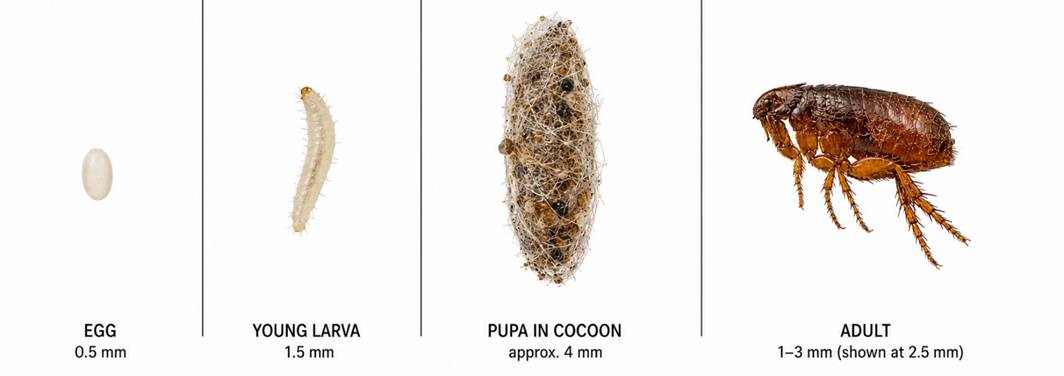
To know how to spot a flea, we first need to understand its’ biology and lifecycle. A female flea can lay up to 50 eggs a day, and as many as 1,500 across her lifetime, which get dropped wherever she happens to be: carpet fibres, sofa seams, floorboard gaps. They hatch into larvae within a few days, and as larvae, they burrow into carpet pile and skirting board gaps, avoiding light. They feed on organic debris, including the dried blood in adult flea droppings (lovely!). Flash forward one to three weeks, and they spin themselves into a cocoon, within which they can lie dormant for months if they so choose.
While a pupa lies dormant, it is resistant to vacuuming and most insecticides. The vibration of your footsteps tells it a host has arrived, triggering its’ re-emergence. Once it’s left its’ cocoon, it seeks out its’ first meal, which it needs within a few days. If you move into a previously empty property, or come home from a long holiday, it’s not unusual to be swarmed by hungry fleas within days.
The non-pet owners amongst us aren’t immune from a flea infestation. A visitor with a dog may leave behind some unwelcome gifts. Then there’s foxes, hedgehogs, and feral cats, who shelter under decking or in an overgrown corner of the garden, seeding the ground with eggs, which can hitch a ride indoors on shoes or clothing.
· Bites around your ankles and lower legs. Flea bites are small, red, and often in a line or cluster. Fleas can't fly, so they bite wherever they can reach and jump.
· Tiny black specks caught in carpet fibres, along skirting boards, or on bedding. This is flea dirt: blood passed by adult fleas, which their larvae feed on.
· Live fleas jumping on soft furnishings, especially anywhere a pet sits or sleeps.
· A pet scratching or losing patches of fur, though reactions vary and an infestation can be well underway with no obvious change in a pet's behaviour.
Flea bites and bed bug bites are easy to confuse, because both leave small, itchy marks in clusters. Fleas bite ankles and lower legs because they jump from the floor, while bed bug bites cluster on whatever skin is exposed while you sleep. We wrote more on how to tell which infestation you are dealing with here.
Run a fine comb over the carpet or your pet's coat above a damp paper towel. Specks that turn reddish-brown on contact are digested blood, confirming fleas on your pet, and by extension, in your home. That’s not a reflection on the cleanliness of your home, fleas move into any environment that offers warmth, shelter, and a way in, tidy or not.
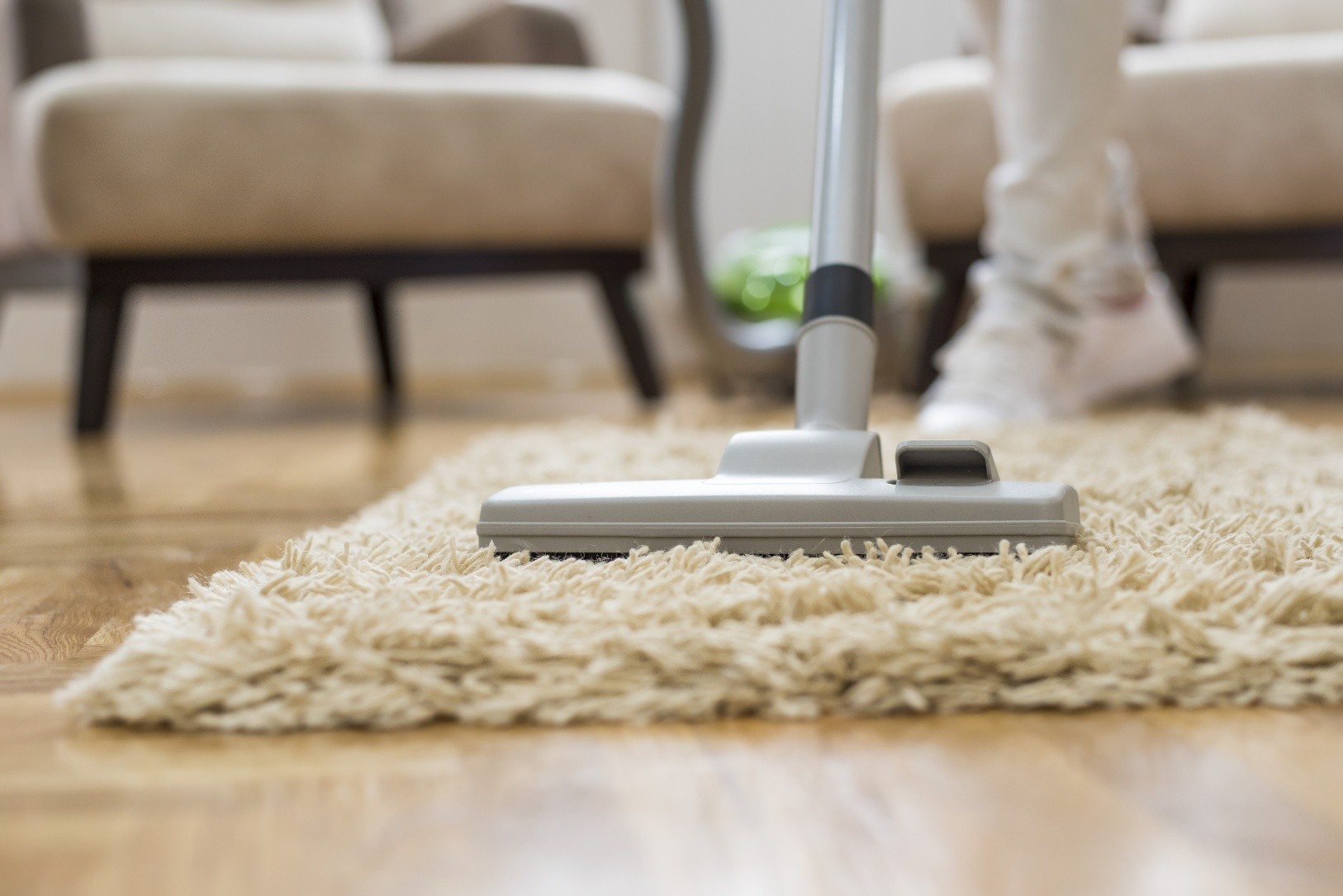
Vacuuming your carpets physically removes eggs, and can trigger dormant pupae to hatch early inside your hoover. What it can’t do is deal with any larvae burrowed into carpet backing or floorboard gaps, or any cocoons. So, while it will help slow the infestation, it will never get rid of it.
If you do vacuum an infested area, empty or dispose of your vacuum’s bag or cannister at once, and give it a good rinse after. Surviving or newly hatched adults can lay eggs inside, and crawl out the nozzle.
Pet treatment alone won’t cut the mustard either, because it does nothing to the population that has already spread to your carpets, sofa, or bedding. Fleas are resistant to most shop-brought treatments, and vet-brought ones are expensive, so don’t use one when they’ll just pick the critters back up from their environment anyway. And don’t entertain the idea that your home might have got off scot-free: if your pet is infested, it’s a sure bet that your home is too.
In short, getting rid of fleas for good means breaking the whole cycle, not just cutting the visible numbers back for a week or two. If you’re stuck in that cycle, get in touch with our team and we'll talk through our process and get you booked in for treatment, at a fixed and agreed-on price.

Treatment starts with identifying where eggs and larvae are concentrated. If you have a pet, it’s probably going to be where they spend the most time, but either way, we will do a thorough search to make sure nowhere is missed. Pet-safe insecticide is applied directly to those areas, alongside an insect growth regulator that stops any surviving eggs and larvae developing into biting adults.
Because pupae can stay dormant for so long, we will typically schedule in a follow-up visit, to make sure the problem is dealt with for good. For larger or more established infestations, fogging can treat hard-to-reach voids and large areas in one go.
You may not want to broadcast your pest issue to the neighbourhood, and we can’t blame you for that. That’s why we arrive in unmarked vehicles and uniform, and treat the situation with discretion, whatever it is.
Once the infestation has been cleared up, make sure it stays that way:
· Vacuum carpets, upholstery, and skirting boards regularly, getting properly into the corners.
· Wash pet bedding, throws, and anywhere a pet regularly settles at 60°C.
· Treat pets on a regular schedule year-round. They won’t slow down over winter if your home is still pleasantly warm.
· Check the garden for signs of foxes or feral cats sheltering under decking, sheds, or dense planting.
· Inspect second-hand rugs, furniture, or pet bedding before bringing them into the house.
Fleas are small, but tough. Every stage in their lifecycle is built to survive harsh (and different) conditions, so vacuuming, no matter how vigorously, won’t solve the issue.
If you're seeing bites, black specks, or fleas jumping across the carpet, get in touch and we'll take it from there. We've been dealing with fleas and other pests across Bristol, Bath, and the surrounding area for over 30 years, creating over 10,000 pest-free homes and businesses.
For more pest advice through the rest of the year, have a browse of our other blogs, or follow us on Facebook.
Reach out for expert pest advice or to schedule a service.
Find clear answers to common pest control queries. Learn about our services, safety standards, and what to expect from Action Force Pest Prevention.
We handle a wide range of pests including rodents, insects, wasps, and more. Our BPCA-certified team uses safe, effective methods tailored to your needs.
Yes. All products and procedures are approved for use in homes and businesses, prioritising safety for people and pets at every step.
We offer flexible appointments Monday to Saturday, 8am–8pm. Most enquiries receive a same-day or next-day response from our local team.
Yes. We stand by our work with clear guarantees and offer follow-up visits if needed to ensure your pest problem is fully resolved.