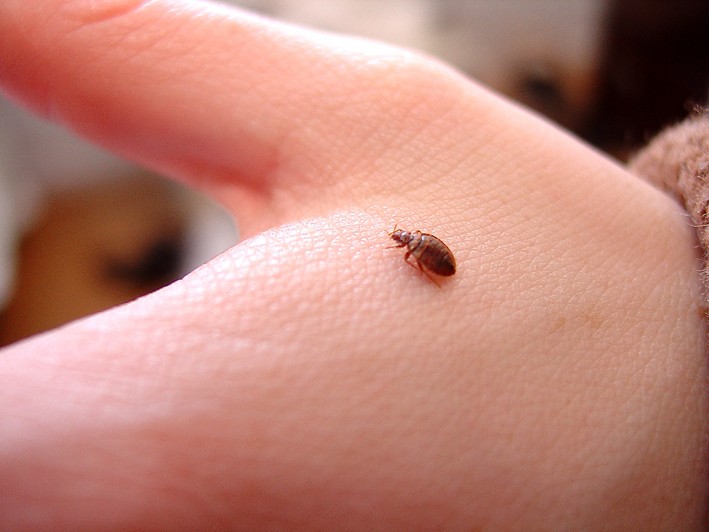
Bed bugs are experts at going unnoticed. They feed at night, and spend their days hidden in mattress seams, bed frames and cracks in the wall, rarely revealing themselves until an infestation has been developing for weeks.
Most people who have them don't realise it until the signs start stacking up. So what are those signs? And what do they actually mean?
Adult bed bugs are roughly the size of an apple seed. They’re flat, oval, and reddish-brown in colour, and they become longer and darker after a feed. They don’t fly or jump, they just stay hidden until you are asleep and defenceless. The NHS list the signs, but the problem is that if you don’t know them, you won’t necessarily jump to the cause.
One reason infestations can become so established before they’re caught is that bed bugs don’t need to feed very often. An adult can go weeks between meals, which means a small population can stay quiet for a long time, tucked away in the seams of a mattress or the joints of a bed frame, right next to their food source. That food source, unfortunately, is you.
It’s a gnarly situation, to be sure, although it isn’t for a lack of hygiene or cleanliness on your part. Bed bugs spread through travel, second-hand furniture, and shared walls with infected neighbours. A spotless bedroom is just as vulnerable as any other.
One sign alone is a subtle thing. It’s normally a mix of several that gives the critters away. So, let’s run through them:
Waking up with itchy marks you don’t remember getting is usually the first thing people notice. Bed bug bites will probably be concentrated on skin that’s exposed while you sleep. They’re small, red, and might be clustered in a rough line shape, because the bug may try to feed several times before finding a good spot.
But being bite-free doesn’t necessarily mean your bed bug-free too. Reactions vary a lot from person to person, and some people get off without obvious marks.
Small reddish-brown spots on sheets or pillowcases will appear when a bug is accidentally crushed during sleep, or when a bite site bleeds slightly after feeding. If you see these spots, take a closer look at your bed and frame, to see if you can find any other signs.
Bed bug droppings are tiny dark dots, similar to a felt-tip mark or a speck of ground pepper. You may find them:
They’ll likely be clustered near their resting place, so look carefully around the area.
Bed bugs moult. As they grow through five developmental stages from nymph to adult, they shed their outer skin each time, leaving behind a pale brown, hollow version of themselves. It’s a little grim to find, not just for the obvious reasons, but also because it means the population has been growing and feeding in your home for some time.
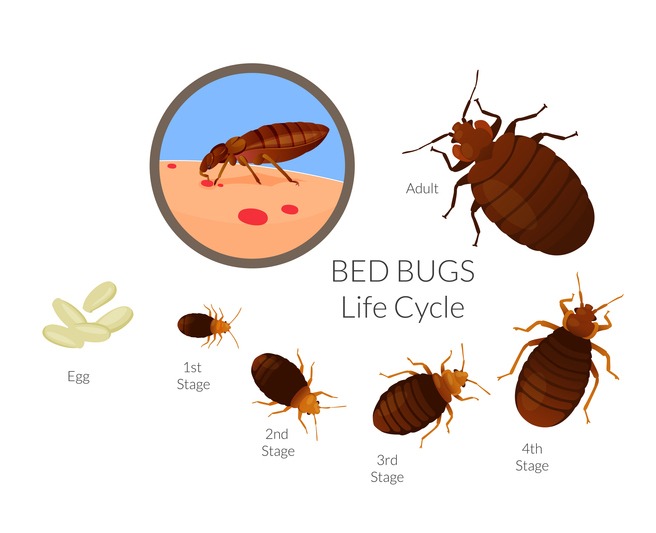
Bed bugs communicate and coordinate using pheromones: chemical signals they release to attract others to a good harbourage spot. In a large infestation, the build-up of these chemicals produces a noticeable odour in the room. To your nose, it might smell musty, sweet, or faintly like almonds. It gets stronger as the colony grows, and it won’t go sway no matter how well-ventilated your room is, because they’ll continue to emit it. That fact in itself is another giveaway.
Holiday accommodation, be it a high-end hotel or a cheap hostel, is the most common place people unknowingly pick up bed bugs. They’re drawn to warmth and carbon dioxide, and hotel beds see a constant rotation of hosts, which makes them ideal breeding grounds. They hitch a ride home in luggage and clothing, and then it’s another week or two before the first signs of their presence appear. This article from the Mayo Clinic breaks down this process in more depth.
If we’re called in for a suspected bed bug infestation, one of the first things we ask is if the person has stayed in a hotel recently.

A live sighting is obviously the most definitive sign, but because bed bugs avoid light and movement, you’re unlikely to catch one out in the open. Pull back the mattress and work a flat card slowly along the seams. Check the joints of the bed frame and headboard with a torch, and look behind any loose wallpaper nearby. They’re flat enough to squeeze into the tiniest gaps. If you do find one, there are sure to be others.
If you’ve uncovered an infestation, your first instinct is likely to grab an over-the-counter spray. Do not do this! Bed bugs have developed significant resistance to many common insecticides, so the spray won’t kill them.
What it will do is disturb them, causing the population to scatter into walls, furniture, and other rooms. Just like that, a problem that was disturbing, yes, but at least contained, has suddenly spiralled out of control.
Beyond that, a Google search may find you recommendations of diatomaceous earth, steamers, and sealed bags, but the honest truth is that bed bugs are almost impossible to get rid of without professional intervention. DIY tactics have a small success rate, and take a lot of effort.
Professional pest controllers use what is called heat treatment to get rid of bed bugs, as well as several other insects. A specialised heater raises the temperature of the room to around 55°C, which kills bed bugs at every stage of their lifecycle, be it egg, nymph, or adult. Then, following a thorough inspection, targeted insecticide is then applied as or if needed.
That should fix the problem, however one thing to be aware of is that bed bugs often travel between properties through wall cavities, pipework, and shared corridors. If your room is the only one treated, there is a risk of the infestation returning again. We always raise this with our customers if it is a factor, because treating the visible problem without understanding how it’s spreading is how people end up calling us twice.
Action Force have been dealing with bed bugs and other pests across Bristol, Bath, and the surrounding area for over 30 years, so if you’re facing a suspected or confirmed outbreak, get in touch via our online form or at 0117 444 9821 and we’ll be happy to talk you through it and provide a free, fair, and transparent quote.
Bed bugs are stealthy, stubborn, and have a knack for getting deeply-rooted into a spot by the time you’ve noticed them.
But the good news is that if you can keep them contained and act before they spread, they are easy enough for a professional to tackle. So if something feels off, trust your instincts and check their hiding spaces for these signs.
For more pest advice, prevention tips, and seasonal warnings on everything from ants to pigeons, follow our Facebook, and read more articles like this over on our blog hub.
Reach out for expert pest advice or to schedule a service.
Find clear answers to common pest control queries. Learn about our services, safety standards, and what to expect from Action Force Pest Prevention.
We handle a wide range of pests including rodents, insects, wasps, and more. Our BPCA-certified team uses safe, effective methods tailored to your needs.
Yes. All products and procedures are approved for use in homes and businesses, prioritising safety for people and pets at every step.
We offer flexible appointments Monday to Saturday, 8am–8pm. Most enquiries receive a same-day or next-day response from our local team.
Yes. We stand by our work with clear guarantees and offer follow-up visits if needed to ensure your pest problem is fully resolved.