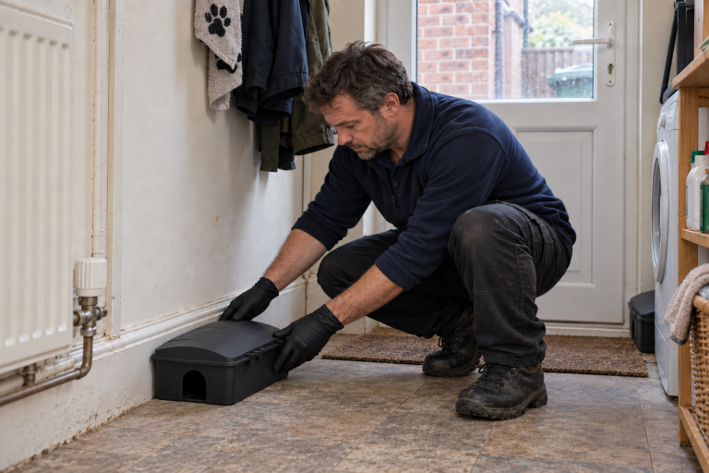
Every autumn, rats start looking for somewhere warmer to spend the winter, and we see an increase in callouts from panicked homeowners across the South West. That begs the question: how well protected is your home from a rat infestation?
Our philosophy is that by understanding how a pest behaves, we can deal with and prevent it more effectively. So today, one of our pest controllers will be answering the questions that come up from worried customers again and again. Can rats swim? Can they climb walls? Are they nocturnal? And, the biggest question of all: Can rats really come up the toilet?
Yes, very well. The brown rat (the one you’re most likely to encounter) is happiest near water and can keep itself afloat for a long time. A flooded drain, a garden pond, or the stream at the bottom of the garden is no deterrent for it, which is why we’ll always check the drains when we come out for an inspection.
Smarter than you’d expect from such an unassuming critter. Rats have a built-in wariness of anything new in their environment, called neophobia. A young rat might take the bait on day one, but an adult will often skirt round a trap for days and will be even more cautious if it moves. All the while, they’re breeding fast enough to go from a couple to a colony in a few months.
All of that is why a professional worth their salt will use rodenticide alongside or instead of traps. The one our pest controllers use has an additional dehydrating effect on the body. That means it breaks down faster, and smells for a shorter period.
Pest controller Ben has been talking about exactly this sort of thing over on our Facebook page, so if you want to find out why traps don’t always work, and what actually makes a good bait (it isn’t cheese), give us a follow, and stay tuned for more. Stay informed, and keep your home protected.
There’s some good news here: almost never. Your toilet has a U-bend (the curved section of pipe just beneath the bowl), which holds a permanent plug of water. It’s there mainly to stop sewer fumes rising into your bathroom, but it is effective at stopping rats from getting through, too.
There are exceptions to every rule. If you have a toilet that’s been out of use for a long time, the water in the U-bend may dry out. With the seal gone, the pipe is open, and a rat living in the sewer below has a clear way in. If you have a toilet that gets no use, like an empty property or out-of-season holiday let, just flush it now and again. Job done.
Drains don’t get let off quite so easily. Rats live in the sewers in huge numbers. If they do get into buildings from below, it’ll be through broken pipes, displaced joints, or an uncovered floor drain. So, if rats keep returning to a property that’s already been treated, a CCTV drain survey can identify the damaged section, and a rat blocker fitted in the pipe will stop them using it again.
They’re no Spider-Man, but if the wall has a grippy surface, yes. Pebble-dash, worn mortar, climbing plants, drainpipes, and cables all aid in an ascent. Brown rats prefer to stay low and burrow, but they can be climbers, if motivated. Black rats, a less common variety in the UK, are more adept climbers and will happily invade a roof space along a pipe or an overhanging branch.
If you’ve heard scratching in the loft, it might not be a bat or bird. Have a look at what’s touching your walls. Ivy, a shed roof butted up against the house, a wheelie bin parked under a soffit; all of these are as good as ladders to a rat.
No, rats are active across the year. What changes is where they want to be. As the temperature drops and food in gardens and hedgerows thins out, they seek to move indoors.
Something like a kitchen wall cavity with the boiler running behind it is an open invitation, as far as they’re concerned, so before the chill sets in, check your home for potential entry points, which we listed out in a previous blog.
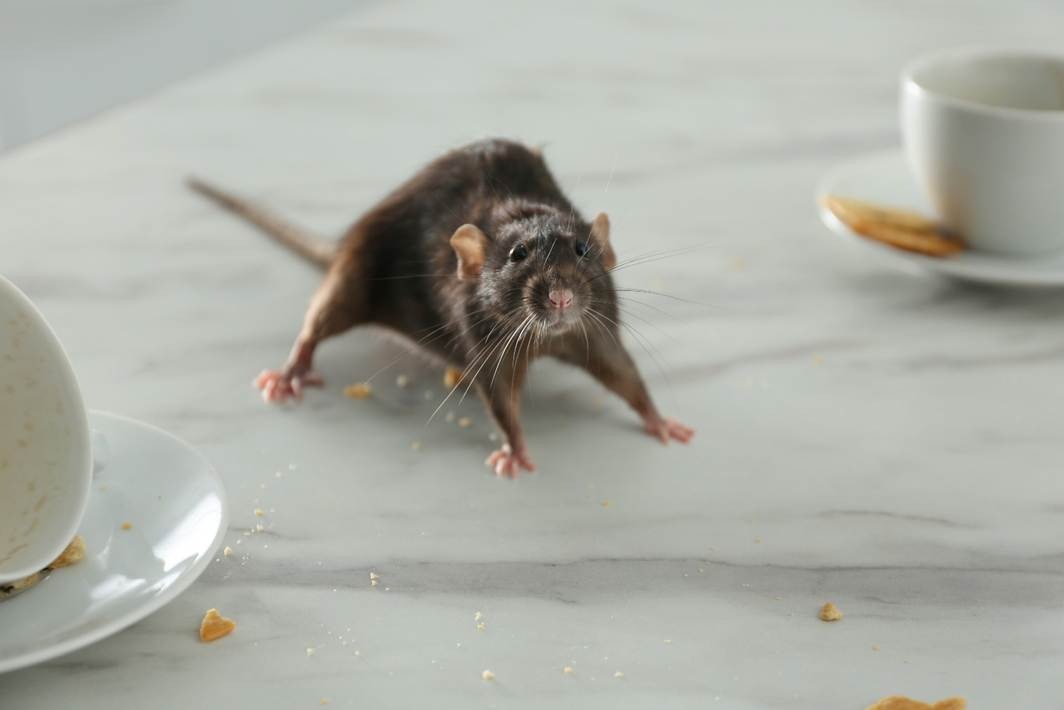
Rats are busiest from dusk to dawn, which is why the first sign they’re around is most commonly unusual noises heard at night, such as scratching behind a wall or above the ceiling.
Seeing a rat in your home in daylight is a bad sign. It usually means the nest is crowded enough that some are being pushed out to forage at riskier times, or something has disturbed them (building work, a new dog, a flooded burrow). If you have such an encounter, you can be fairly certain you’ve got a well-established infestation on your hands.
If rats are cornered or handled, they are very likely to bite, and yes, that bite can be highly dangerous. If you see a rat, do not try to handle it yourself. Keep your distance and call a professional. If you are bitten, see a doctor immediately: the aptly named Rat Bite Fever can cause death if left untreated.
Biting aside, rat urine and droppings can carry Seoul Hantavirus and Weil’s disease, and droppings contaminate any surface or food they cross. Rats also gnaw constantly to keep their teeth in check. Cables are a favourite of theirs, and gnawing through them creates a fire hazard.
In short, a rat problem isn’t one to leave and see if it sorts itself out. It won’t!
Getting rid of rats for good means finding the nest, treating it properly, and sealing every route in, drains included. That’s not a job for a homeowner, but it’s what our BPCA-certified team does across Bristol and Bath, at a fixed and guaranteed price. If you’ve got a situation on your hands, get in touch or call us on 0117 444 9821. And if you’ve got a question we haven’t answered, follow us on Facebook and ask us yourself!
Reach out for expert pest advice or to schedule a service.
Find clear answers to common pest control queries. Learn about our services, safety standards, and what to expect from Action Force Pest Prevention.
We handle a wide range of pests including rodents, insects, wasps, and more. Our BPCA-certified team uses safe, effective methods tailored to your needs.
Yes. All products and procedures are approved for use in homes and businesses, prioritising safety for people and pets at every step.
We offer flexible appointments Monday to Saturday, 8am–8pm. Most enquiries receive a same-day or next-day response from our local team.
Yes. We stand by our work with clear guarantees and offer follow-up visits if needed to ensure your pest problem is fully resolved.