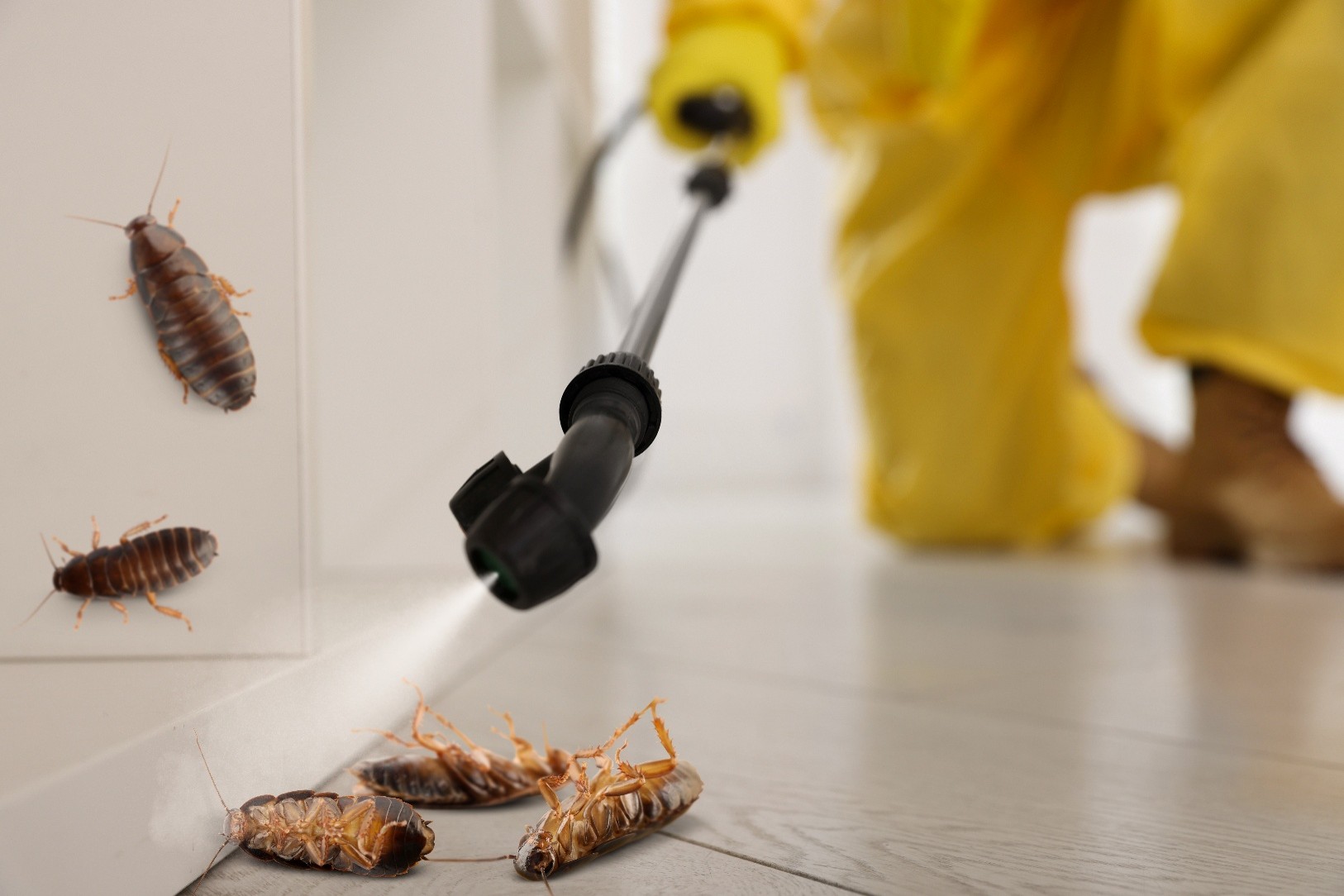
If you've spotted a cockroach in your kitchen or business, the instinct is to grab a spray and deal with it yourself. That makes complete sense. The problem is that with cockroaches, that instinct always backfires, and understanding why is half the battle.
In UK homes and businesses, there are two cockroach species you might encounter: the German cockroach and the Oriental cockroach. They look similar enough to the untrained eye, but they behave quite differently, and that affects where they're hiding and how treatment needs to be targeted.
German cockroaches are the more common of the two, and unfortunately, the more problematic. They're small, fast-breeding, and drawn to warmth and food. As you can imagine, that makes kitchens and hospitality environments like restaurants their natural habitat. They cluster around hidden areas close to heat sources: behind the motor of a fridge, inside the housing of a commercial oven, around the back of a dishwasher… really, wherever is warm and undisturbed.
Oriental cockroaches are larger, slower, and prefer cool and damp conditions. They're more likely to turn up in basements, drains, utility rooms, and in the gaps beneath flooring. They're still a serious problem, but the conditions that attract them are different, and so, naturally, are their preferred hiding spots.
One cockroach in the open is rarely the whole picture. German or Oriental, they reproduce quickly, and spend most of their time hidden away. A female German cockroach produces egg cases, called oothecae, that can contain up to 40 eggs each, and she'll produce several in her lifetime. Those cases get tucked deep into warm, tight spaces, well out of sight. A colony has probably already been developing for weeks before you see a single critter.
If you want to find out more about cockroaches and their characteristics, including less common species, have a look at this article by the BPCA.

It seems counterintuitive, but reaching for an over-the-counter spray is one of the most common reasons cockroach problems escalate. Many of the products available to consumers contain pyrethroids, a class of insecticide that cockroach populations have increasingly developed resistance to: in fact, only 20% of German cockroaches were killed even after being exposed to sprayed surfaces for 30 minutes.
What insecticide spray will do is disturb them. Cockroaches exposed to a repellent will scatter, moving deeper into wall voids, behind units, and into adjacent rooms. Just like that, what was a gnarly but contained problem is out of control, making subsequent treatment attempts, including by professionals, significantly harder.
Like we mentioned earlier, the cockroaches you see aren’t the infestation; it’s the cockroaches you don’t, the colony that is hidden away in places you can’t get to. Egg cases are glued directly into these harbourage spots, so spraying surfaces, or even cockroaches you do see, won’t do anything to the eggs developing inside the plinth of your kitchen unit.
Even if a treatment knocks back the adult population, a new generation will emerge from those untouched egg cases within weeks to wreak more havoc on your life. German cockroaches in particular breed fast enough that a small infestation can become huge within a single season. The longer it goes on, the more established the colony becomes, and the further it spreads out. Waiting, or persisting with an approach that isn't working, will only make the issue harder and more expensive to tackle.
Professional treatment starts with a thorough inspection. Your pest controller will identify the species, map out the harbourage points (where they live and lay eggs), and assess how established the infestation is. Getting a full picture means they can develop a strategy that will deal with the population once and for all.
Treatment will normally use professional-grade gel bait, which is applied directly at harbourage points. The bait and toxicant used, its placement, and the quantity all depend on the species and severity. In more established cases, an insect growth regulator might be used too, which interrupts the breeding cycle and stops new generations from reproducing.
One professional visit is rarely enough. Follow-up monitoring will confirm whether populations are declining, if bait is being taken, and whether any spots were missed on the first inspection. That's not a failing on anyone's part; it's just the reality of dealing with such sneaky creatures.
If you're dealing with cockroaches, get in touch with our team via our online form or at +44 117 444 9821 to get them gone for good. We'll give you a fixed and competitive price upfront, and always tackle the problem at its’ roots, not just what you can see.
Clearing the infestation is one thing, but if the conditions that brought them in haven't changed, you're just resetting the clock.
Warmth from appliances is a big one, and so is moisture: a slow drip under the sink, condensation on cold water pipes, or a damp corner behind the washing machine are all attractive spots to them. They also seek out food residue in places like behind the hob and under the fridge. It doesn’t mean your home is dirty: cockroaches just go where humans can’t clean.
If you run a business that gets regular deliveries, cardboard is another thing to look out for. Packaging is one of the most common ways they spread into new buildings.
To help make your home or business more cockroach-proof:

A cockroach sighting in a food preparation or storage area is a different order of problem to one in a domestic kitchen. It's a food safety and compliance issue, and your reputation as a business is at risk. Environmental health inspectors expect to see evidence of active pest management, including monitoring records, treatment logs, or proofing checks. A reactive response after a sighting isn't the same as a documented management programme.
If you run a food business and have seen cockroaches, or want to make sure you're protected before you do, our commercial pest control service covers treatment of any pests, full documentation, and ongoing monitoring and preventative maintenance.
A small problem is manageable, but an established colony with egg cases tucked into half a dozen harbourage spots will take a lot more doing to disperse. If you’ve spotted cockroaches, it is vital to act quickly.
Get in touch with our team at Action Force by filling out our online form or by calling +44 117 444 9821 for professional and preventative help backed by 30 years’ experience and insurance and certification from the BPCA.
For more on what to look out for around your home or business, have a browse of our blog, or follow us on Facebook for quick tips.
Reach out for expert pest advice or to schedule a service.
Find clear answers to common pest control queries. Learn about our services, safety standards, and what to expect from Action Force Pest Prevention.
We handle a wide range of pests including rodents, insects, wasps, and more. Our BPCA-certified team uses safe, effective methods tailored to your needs.
Yes. All products and procedures are approved for use in homes and businesses, prioritising safety for people and pets at every step.
We offer flexible appointments Monday to Saturday, 8am–8pm. Most enquiries receive a same-day or next-day response from our local team.
Yes. We stand by our work with clear guarantees and offer follow-up visits if needed to ensure your pest problem is fully resolved.