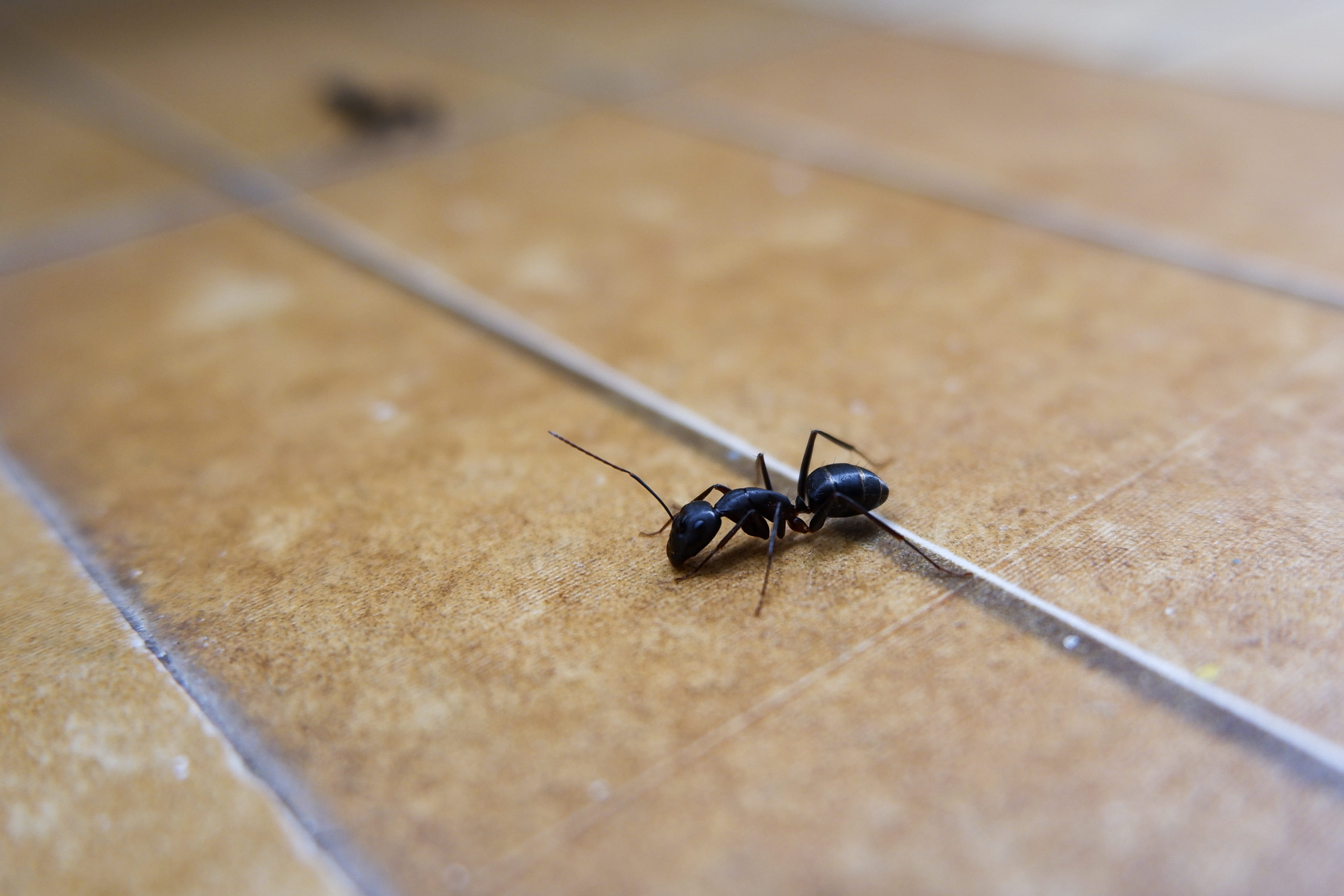
Kitchens are the most common target for ants looking for food, moisture and safety. If there’s a way in, a few sugar granules or a bowl of pet food could be all the enticement a colony needs to call your home theirs. A lone foraging ant sends out a scent trail, and before you know it, they’re everywhere.
The key to preventing this is threefold: block any access routes, make the space less attractive, and disrupt their trail before it becomes established. Let’s talk about how they colonise your kitchen, and how to deal with ants early.
When we understand a pest, we equip ourselves with the information to repel it, so to understand why ants are attracted to kitchens in particular, we first need to know what they need to thrive, and how they find it.
You wouldn’t be blamed for not thinking much of the humble ant, but they are actually the best explorers on the planet, thanks to their incredible navigational skills and strength in numbers. They spread out from their nest in all directions, testing routes, investigating smells, and squeezing through corners, cracks, and crevices until one of them finds food or water, which, of course, kitchens have in abundance.
For an ant, “food” means anything from crumbs, to grease, to bin lid residue, but sugar is their favourite. As for water, they can get that from any form of moisture, like water in a sink, or a leaky pipe.
Once a worker has found what they’re after, they head back home. As they go, they release a pheromone trail. Humans can’t smell it, but for other ants, it’s a chemical signal, saying “Come here! There’s a feast!”. As more ants come and go to see it for themselves, they will lay pheromones too.
The stronger the trail becomes, the better the location is, and the more ants will come, which is it why can get out of hand so quickly: they’ve explored, reported back, and turned a lucky find into a reliable supply line. If your kitchen remains open and keeps providing food, moisture, and shelter, why would they go anywhere else?

Now that you know what an ant is looking for, how it communicates, and how it enters your home, you might have already guessed that a dramatic deep clean or a magic pesticide won’t quite stop them in their tracks.
So, what actually prevents ants? Well, there are four things:
1. Blocking off access
2. Making your kitchen less rewarding or appealing
3. Stopping their pheromone trail
4. …And using DIY repellents as a fallback
If ants can’t get in, they’ll never become a problem. That seems obvious enough, but ants are tiny, and their entry points are too. The most common ones are:
• Gaps around pipes
• Worn sealant by the window
• Spaces under back doors
• Cracks in the skirting
• Little openings where flooring meets the wall
Sealing up gaps won’t ant-proof your house forever, but it does make it harder for them to get in or turn a one-off discovery into a habit. If there are already ants nesting nearby (check around paving, flowerbeds, or wall cavities), it’s even more important.
If you’re already facing an invasion, finding their entry is as simple as following their trail (you might have to look behind units or skirting). Once you’ve closed the gap, you can get rid of ants that are still around without worrying about reinforcements.
“Appeal” to an ant doesn’t automatically mean dirtiness, and they won’t vanish with a clean alone, no matter how deep. Of course, crumbs under the toaster, grease near the hob, or a sticky patch by the bin are all enticing, but so is pet food, sugar round a jar lid, and even condensation.
That said, consistent cleaning will reduce the chances of them finding a food source. Wipe down surfaces regularly, store food in sealed containers, rinse out bins, and don’t leave any easy pickings lying around. If the location of the goods is sporadic or unreliable, ants will return empty-handed and so won’t leave any pheromones in their wake. That goes doubly so for commercial kitchens.
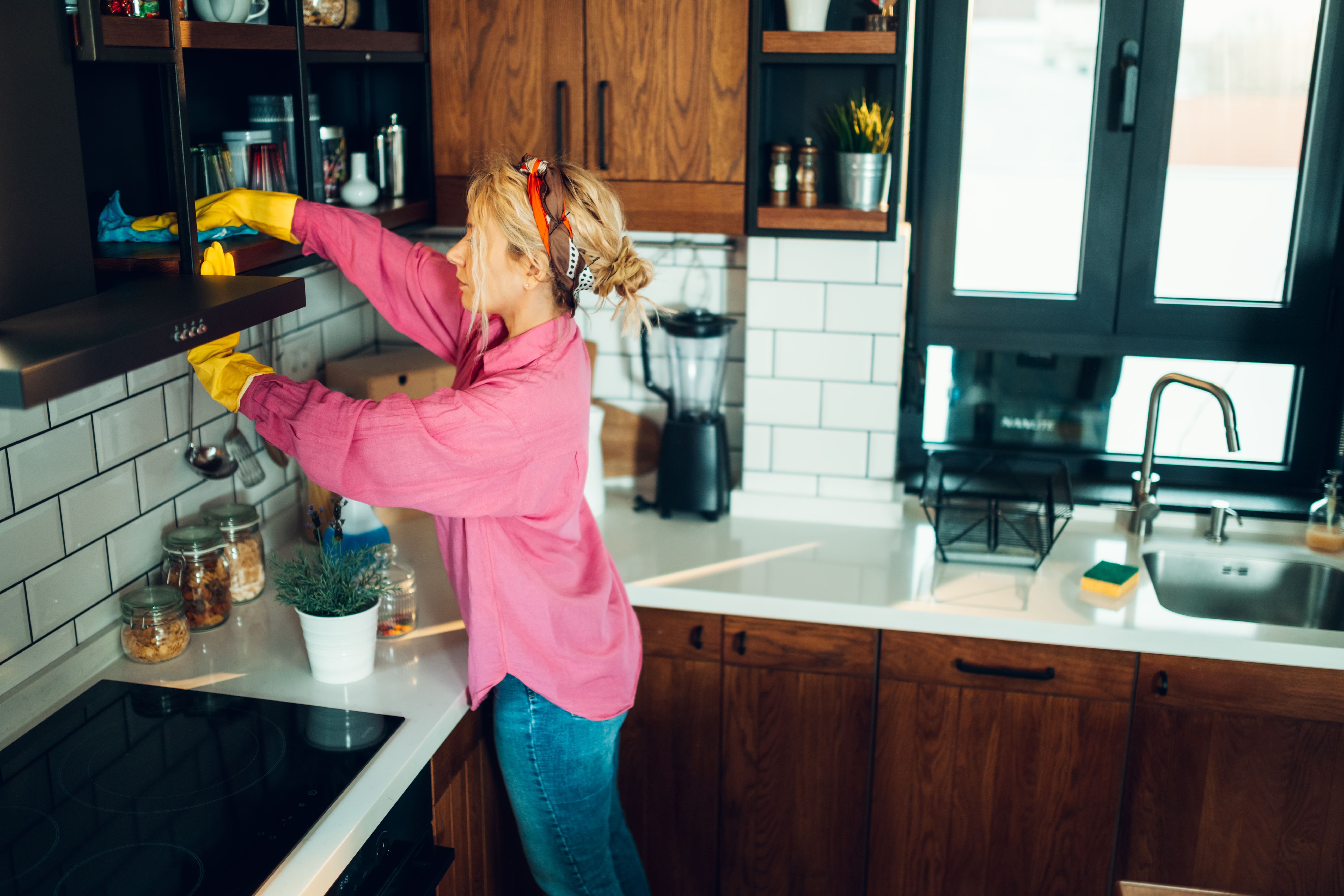
On the topic of pheromones, let’s look a little closer at how they work. See, ants don’t rely on memory at all, so their scent trails act as an invisible map. If you get rid of the scent, your kitchen may as well have never existed, as far as they’re concerned.
That’s also why cleaning ants away isn’t enough on its own. If the chemical trail is still there, more will follow it. Wiping down surfaces where they’ve been with white vinegar or a strong-smelling cleaner will rub out that route on their map.
Speed trumps perfection here, because the quicker you break the trail, the less established it will become. But do keep in mind that you won’t be able to remove the scent where you can’t reach (like if they’re coming through a small crack in the wall), so it’s possible that they’ll get to the end of the trail and keep looking around, trying to figure out why it’s there.
DIY remedies can help repel ants, but as with everything else, they are unlikely to solve the problem on their own.
We’ve already covered white vinegar, but natural deterrents like citrus peel, cinnamon, and coffee grounds can sometimes help in the same way (that is, by disrupting their sense of smell). Just scatter some by suspected entry points. However, if a nest is nearby and a colony has already settled in, a decoy smell won’t stop them.
That’s really the difference between prevention and cure. DIY can help deter ants in the earliest stages of an invasion, but it’s far less reliable once the activity is established. You can learn more about this as well as the most common types of ants encountered, on the British Pest Control Association website.
Ants don’t need much to get moving, but once they’re established, they sure are stubborn. At that point, repelling them isn’t enough. You’re dealing with a tried and tested food source, and they’ll stop at nothing to get to it.
If you’re seeing the same trail from the same crack or corner over and over, or activity spreading into more than one area or room, nothing we have discussed here will solve the problem. You have to tackle it at its source: their nest, and their route to your kitchen.
If you’ve reached that point, we can take it off your hands. We deal with ants and other pests in homes, hospitality settings and commercial premises across Bristol, Bath and the surrounding area, and we’ll always handle the problem discreetly and at every stage of its’ development, not just what’s visible. If ants keep coming back, get in touch with us or book a visit online.

Ant prevention is really about making your kitchen more trouble than it’s worth. If ants can’t get in easily, can’t find anything worth taking, and can’t follow a trail back to it, they’ll opt for easier pickings elsewhere.
If you can stay on top of spills and crumbs, keep food sealed, and take quick action if you spot any early activity, you are unlikely to have any problems. If you do, you can always call on us via contact form or 0117 444 9821. And for some pest prevention top tips you can work around your life, check out our Facebook page.
Reach out for expert pest advice or to schedule a service.
Find clear answers to common pest control queries. Learn about our services, safety standards, and what to expect from Action Force Pest Prevention.
We handle a wide range of pests including rodents, insects, wasps, and more. Our BPCA-certified team uses safe, effective methods tailored to your needs.
Yes. All products and procedures are approved for use in homes and businesses, prioritising safety for people and pets at every step.
We offer flexible appointments Monday to Saturday, 8am–8pm. Most enquiries receive a same-day or next-day response from our local team.
Yes. We stand by our work with clear guarantees and offer follow-up visits if needed to ensure your pest problem is fully resolved.