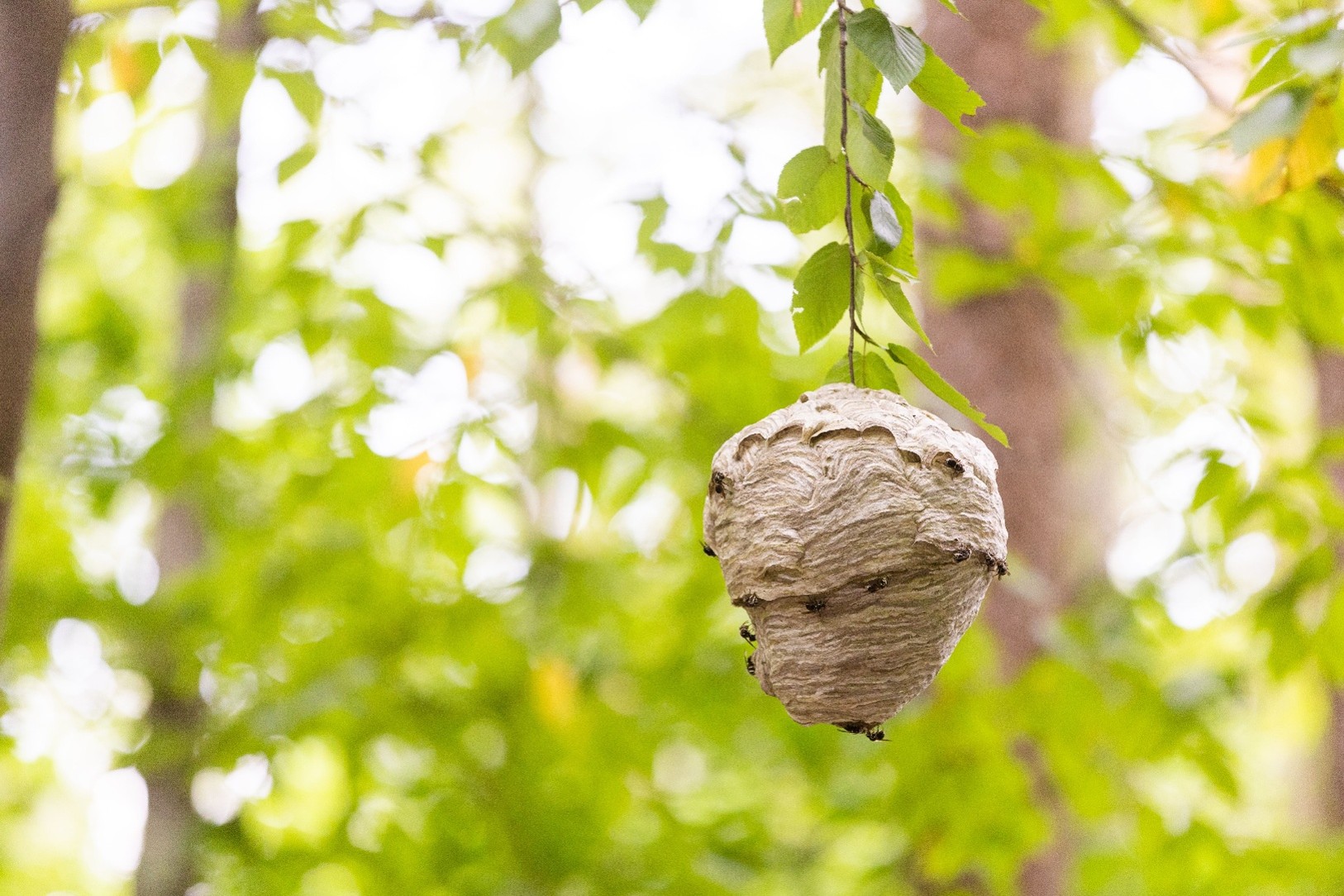
If you have the misfortune of finding a wasps’ nest in or near your house, you probably either want to deal with it now, or steer well clear and hope for the best. Neither approach is fully incorrect, but acting without understanding what you’re dealing with is how situations like these become dangerous. A mature nest in late July and a papery structure in May are very different beasts, and knowing how will make sure you deal with it properly.
Wasps build a new nest from nothing every year. In spring, a queen emerges from hibernation, finds a suitable spot, and starts raising the first workers and constructing the nest from chewed wood pulp. Once the first wave of workers are grown, they take over: expanding the nest, foraging for insects, and feeding the next generation of larvae. To start, there’s a few dozen workers, but over the months, they grow up to several thousand.
By late July, the larvae are gone, and with nothing left to feed, the workers stop collecting insects and start foraging for sugar instead. This is why around this time, they become much more… aggressively interested in people’s lunch (especially sweet drinks and fruit).
All of that to say, if you find a nest in the latter half of summer, stay well clear. It is much more populated, and that population is much more freely aggressive.
If you want to learn more about wasp behaviour, and telling a wasp apart from a bee, read the BPCA’s guide to wasp control.
The most common mistake is reaching for a can of wasp killer from the garden centre. It feels like the obvious first step, but they can actually do more harm than good.
Consumer sprays are repellent-based; rather than killing the colony outright, they agitate it. Disturbed wasps release an alarm pheromone that signals the rest of the nest to defend, and in a colony of several thousand workers, that response is the last thing you want.
There’s also the question of penetration with OTC solutions: a wasp nest is a layered structure, and the colony lives deep within it. Spraying the exterior does almost nothing to the wasps further in, so you end up disturbing thousands and killing very few.
Your next thought might be to block their entrance and trap them inside, but that won’t work either. They’ll just find another way out, or if that fails, make one. If the nest is in a roof space or wall cavity, that alternative exit is often inward, into the living space, redirecting the problem into the home itself.
Physically interfering with the nest is just as risky. The papery structure comes apart easily, but the colony inside it does not. Knocking it down, trying to bag it, or dislodging it in any way is one of the quickest ways to trigger a mass defensive response, and even protective clothing isn’t reliably adequate against a full swarm from a mature summer nest.
Anaphylaxis from a wasp sting is a medical emergency. Don’t approach the nest, don’t attempt to investigate it, and don’t wait to see how things develop. Call a professional immediately and keep everyone else at a safe distance until it’s been treated.
Some people don’t discover they’re allergic until the second or third sting, when sensitisation has built up. Anaphylaxis UK has guidance on the symptoms, and what to do if you think you or someone nearby has had a severe reaction.
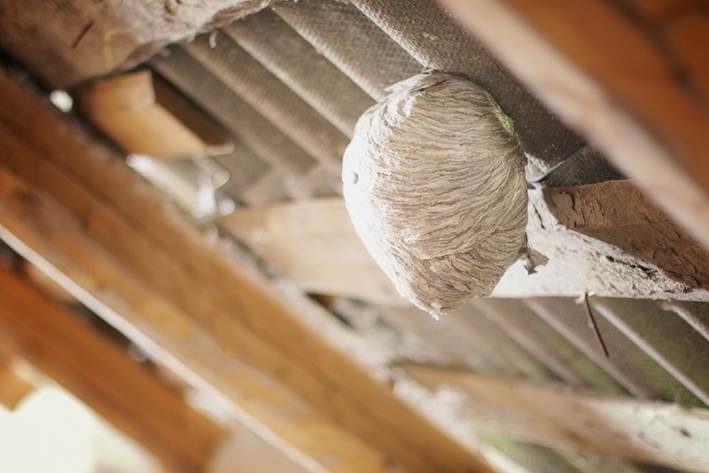
Keep people and pets away from the nest and its flight path. Wasps aren’t looking for trouble; they sting when they feel threatened, which they will do if they see humans surrounding their home. If wasps are flying near it or you, move away calmly and don’t swat at them.
From a safe distance, note where the entrance is and whether the nest is attached to the structure of the building, or freestanding. Then let a professional deal with it. A trained pest controller will apply insecticide directly into the nest entrance using products that penetrate the structure and reach the colony throughout. The whole process can be done and dealt with within an hour, and once the colony has died off (usually within 1-2 days) the nest can be safely removed.
A wasp nest in your garden or on your house isn’t something that can afford to be left. Action Force have over 30 years’ experience serving Bristol, Bath, and the surrounding areas, so for a thorough job at a fixed price, done by friendly local people, get in touch to book. Same-day service is often possible.
Colonies die off completely by October or November. Only the queen wasp survives through winter, by hibernating in a dark and sheltered place like behind loose tree bark, beneath roof eaves, or in attics or sheds. Once the nest has emptied out, it will never be reused the following year, because the queen cannot heat and defend it on her own before she has created a colony.
If the nest is in a spot with no foot traffic, like a far corner of the loft or high in a tree away from paths or seating, it can safely be left alone. But if it’s near somewhere people will be, don’t wait it out. The population is at its peak, the colony is foraging aggressively, and the risk of an incident is at its highest.
If you come across what looks like an old nest in autumn or winter, it’s almost certainly empty. You can remove it yourself at that point, or leave it where it is. Either way, it poses no risk.
If the nest is somewhere with foot traffic, July is not the time for a wait-and-see approach. The colony is as large as it’ll get, and the nest is a genuine safety risk, especially if you have children or pets. Above all, don’t try to handle it on your own.
We’ve been dealing with all manner of pests, wasps included, for over 30 years. If you need help restoring safety to your home, visit our wasp control page to learn more, then book a visit online or by calling +44 117 444 9821.
For more pest advice through the summer months, follow us on Facebook, and read our other blogs.
Reach out for expert pest advice or to schedule a service.
Find clear answers to common pest control queries. Learn about our services, safety standards, and what to expect from Action Force Pest Prevention.
We handle a wide range of pests including rodents, insects, wasps, and more. Our BPCA-certified team uses safe, effective methods tailored to your needs.
Yes. All products and procedures are approved for use in homes and businesses, prioritising safety for people and pets at every step.
We offer flexible appointments Monday to Saturday, 8am–8pm. Most enquiries receive a same-day or next-day response from our local team.
Yes. We stand by our work with clear guarantees and offer follow-up visits if needed to ensure your pest problem is fully resolved.